
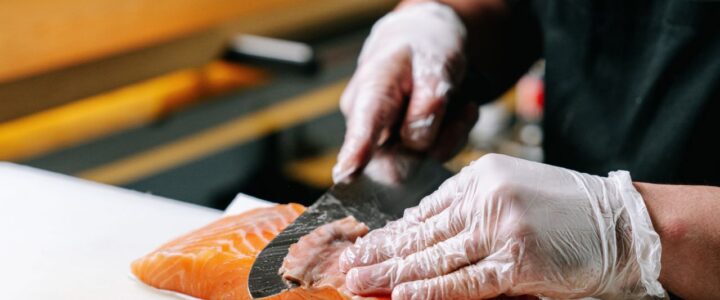
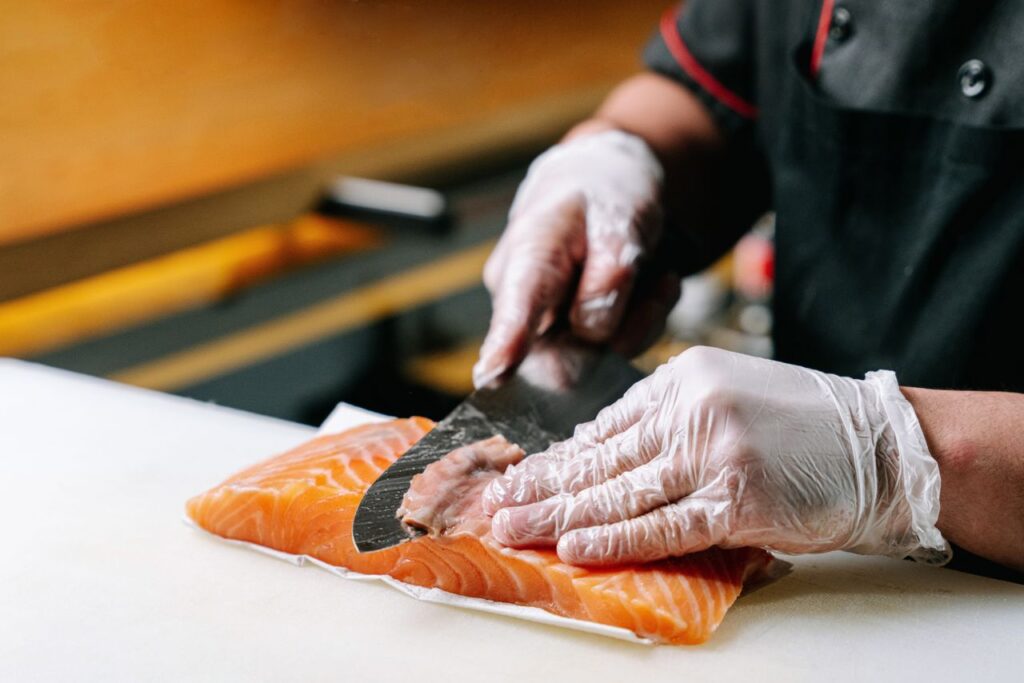
If you’re comparing a boning knife vs fillet knife, you’re probably wondering whether you really need two specialty knives that look so similar. The answer depends mostly on what you’re cutting. A boning knife gives you control when working around meat, bones and joints, while a fillet knife gives you the flexibility needed to follow the contours of fish.
Imagine this scenario: You’re standing at the cutting board with a whole chicken in front of you.
Do you grab a boning knife or a fillet knife?
Now switch that chicken for a whole salmon.
Same knife?
Not quite.
Boning and fillet knives look similar enough that it’s easy to assume they’re interchangeable. Both have narrow blades, pointed tips and far more flexibility than the average chef’s knife. But when comparing a boning knife vs fillet knife think of the task at hand.
Both are designed with different jobs in mind.
Here’s the simple answer:
👉 Choose a boning knife if you mostly prepare chicken, beef, pork, lamb or game.
👉 Choose a fillet knife if you regularly clean, skin or fillet fish.
👉 If you prepare both but only want to buy one knife, a flexible or semi-flexible 6-inch boning knife is usually the more versatile choice for the average home cook.
Let’s break down why.
🔽 Jump to What You Need
👉 Quick Answer
👉 Quick Comparison
👉 What Is a Boning Knife?
👉 What Is a Fillet Knife?
👉 Stiff vs Flexible Blades
👉 Which Knife Is Best for Different Tasks?
👉 Which Knife Should You Buy?
👉 Frequently Asked Questions
🥩 The Quick Answer
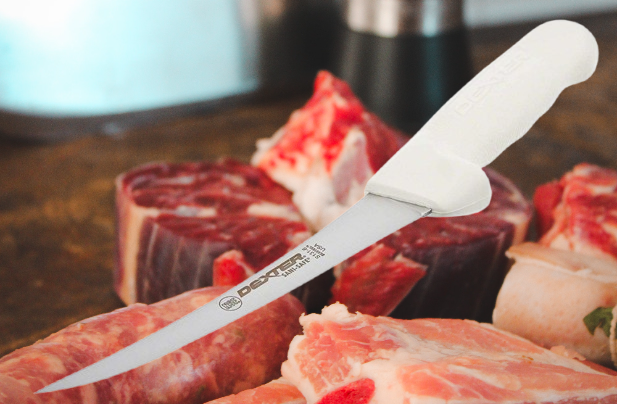
Think of it this way:
Boning knife = meat and bones.
Fillet knife = fish and flexibility.
A boning knife normally has a relatively short, narrow blade that gives you excellent control while cutting around joints, bones, cartilage, fat and connective tissue.
A fillet knife is usually longer, thinner and noticeably more flexible. That flexibility lets the blade bend and follow the backbone and ribs of a fish.
That’s the main difference.
But there’s some overlap.
A flexible boning knife can handle many fish-preparation jobs, while a fillet knife can sometimes trim or debone delicate meat.
The more specialized the job, the more you’ll appreciate having a knife designed for it.
🆚 Quick Comparison
| Feature | 🥩 Boning Knife | 🐟 Fillet Knife |
|---|---|---|
| Primary purpose | Removing meat from bones | Filleting and skinning fish |
| Typical blade | Short and narrow | Long, thin and narrow |
| Common length | About 5–7 inches | About 6–9+ inches |
| Flexibility | Stiff to flexible | Usually flexible |
| Tip | Sharp/pointed | Fine, pointed |
| Control around joints | ⭐⭐⭐⭐⭐ | ⭐⭐⭐ |
| Following fish bones | ⭐⭐⭐ | ⭐⭐⭐⭐⭐ |
| Removing fish skin | ⭐⭐⭐ | ⭐⭐⭐⭐⭐ |
| Trimming fat/silverskin | ⭐⭐⭐⭐⭐ | ⭐⭐⭐ |
| Poultry | ⭐⭐⭐⭐⭐ | ⭐⭐⭐ |
| Beef & pork | ⭐⭐⭐⭐⭐ | ⭐⭐ |
| Whole fish | ⭐⭐⭐ | ⭐⭐⭐⭐⭐ |
| Best all-around choice | 🏆 Yes | Mostly for fish |
🎯 KnifeGenie Bottom Line
If you only remember one thing from this guide:
Boning knives prioritize control. Fillet knives prioritize flexibility and reach.
🔪 What Is a Boning Knife?
A boning knife is a narrow-bladed knife designed for detailed cutting around bones, joints and connective tissue.
Instead of forcing a large chef’s knife into awkward spaces, the narrow blade allows you to guide the edge close to the bone.
That means cleaner cuts and less edible meat left behind.
Typical boning-knife jobs include:
- Deboning chicken thighs
- Removing chicken breasts from the carcass
- Separating poultry joints
- Trimming pork
- Removing fat from beef
- Removing silverskin
- Cleaning tenderloin
- Breaking down lamb
- Processing venison and other game
The pointed tip is especially useful because it can enter small spaces around joints and bones where a wider chef’s knife feels clumsy.
Victorinox similarly describes boning knives as tools for jobs requiring precision and control, including removing bones, trimming fat and sinew and separating joints.
🥩 Why It Works
Imagine deboning a chicken thigh.
You don’t need a long sweeping blade.
You need something short enough to control with your fingertips while you trace the shape of the bone.
That’s exactly where a boning knife shines.
For a deeper look at choosing one, read KnifeGenie’s:
Best Boning Knife for Home Butchers – 2026 Guide
👍 Boning Knife Pros and Cons
Pros
✔ Excellent control around bones
✔ Great for poultry, beef, pork and game
✔ Narrow blade reduces unnecessary meat loss
✔ Pointed tip reaches tight spaces
✔ Excellent for trimming fat and silverskin
✔ Available in stiff, semi-flexible and flexible versions
✔ More versatile than a fillet knife for most meat preparation
Cons
✘ Usually shorter than a dedicated fillet knife
✘ Stiff models don’t follow fish bones as easily
✘ Less efficient when skinning large fish fillets
✘ Choosing the wrong amount of blade flex can make some jobs harder
🐟 What Is a Fillet Knife?
Now imagine that chicken has magically turned into a salmon.
Your cutting technique changes completely.
Rather than maneuvering around a hard joint, you want the blade to travel smoothly alongside the backbone and ribs while removing as little flesh as possible.
That’s the fillet knife’s specialty.
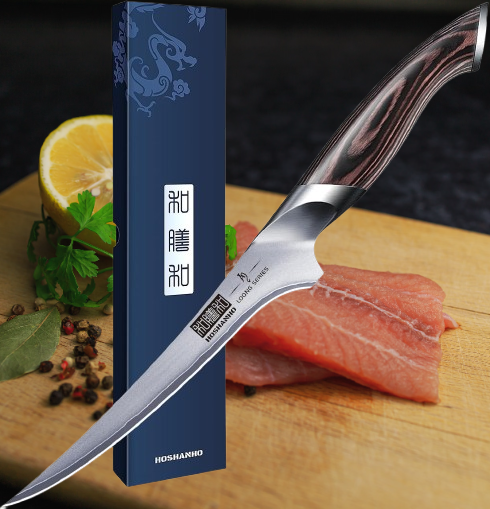
A typical fillet knife has a blade that is:
Long. Thin. Narrow. Flexible.
The flexibility is especially important.
When you press the blade gently against the fish’s skeleton, it can flex to follow the contours rather than cutting straight through the flesh.
Victorinox describes its filleting knives as long, lean, slightly tapered and flexible enough to negotiate fish bones.
That’s precisely why a good fillet knife feels so different from a stiff boning knife.
🐠 What Is a Fillet Knife Used For?
A fillet knife is particularly good for:
- Filleting whole fish
- Following the backbone
- Working around rib bones
- Removing fish skin
- Portioning fillets
- Trimming delicate fish
- Removing unwanted fat
- Making long, precise cuts
Some fillet knives can also handle delicate meat-trimming jobs.
But fish is where they really earn their keep.
👍 Fillet Knife Pros and Cons
Pros
✔ Excellent flexibility
✔ Follows the natural contours of fish
✔ Long blade makes sweeping cuts easier
✔ Excellent for skinning fish
✔ Helps reduce wasted flesh
✔ Great for delicate precision work
✔ Available in different lengths for different fish sizes
Cons
✘ Usually too flexible for heavy meat work
✘ Less control around tough joints
✘ Not ideal for heavy beef or game processing
✘ Thin blade shouldn’t be forced through bone
✘ Can feel less controlled to beginners
🦴 Stiff vs Flexible: The Difference That Really Matters
Here’s where knife shopping gets interesting.
Not every boning knife is stiff.
You can find:
Stiff Boning Knives
Best for:
🥩 Beef
🦌 Venison
🐖 Pork
🍖 Large cuts
💪 Tough connective tissue
A stiff blade gives you more leverage and control when working with dense meat.
Semi-Flexible Boning Knives
Best for:
🐔 Chicken
🦃 Turkey
🥩 General butchery
🐖 Pork
🐟 Occasional fish
If you’re buying one boning knife for your home kitchen, this is arguably the sweet spot.
You get enough flex to follow contours without making the blade feel floppy.
Flexible Boning Knives
Best for:
🐟 Fish
🐔 Poultry
🥩 Delicate trimming
✂️ Removing silverskin
This is where the boundary between boning and fillet knives begins to blur.
A flexible boning knife can be surprisingly capable with smaller fish.
🤔 Why Do Boning and Fillet Knives Look So Similar?
Boning and fillet knives look alike because both are designed for precise cutting around bones and delicate tissue. They typically have narrow, pointed blades that allow greater control than a standard chef’s knife.
The main difference is how their blades are designed to perform.
- Boning knives are generally shorter and may have stiff, semi-flexible or flexible blades, depending on the task.
- Fillet knives are usually longer, thinner and more flexible, allowing the blade to follow the contours of fish bones and skin.
Although their designs overlap, blade flexibility is one of the most important differences when deciding which knife to use.
🐟 For Fish: Which Is Better?
Which Knife Is Best for Different Tasks?
The best knife depends on what you’re preparing. Although boning and fillet knives share a similar shape, their differences become clear when you work with meat, poultry, game, or fish.
Filleting Fish: Choose a Fillet Knife
If you regularly prepare whole fish such as snapper, salmon, trout or grouper, a fillet knife is generally the better choice.
Its long, narrow, flexible blade follows the backbone and rib bones, helping you separate the flesh with less waste. The extra length also makes it easier to remove skin using smooth, controlled strokes.
Best choice: Fillet knife.
That means:
More fish on your plate. Less fish left on the bones.
Longer fillet knives are also useful when removing skin because you can make a long, controlled slicing motion between the flesh and skin.
Winner: 🏆 Fillet Knife
🥩 For Meat:
Trimming Beef, Pork and Lamb
A boning knife offers better control when trimming meat, removing fat and silverskin, or working around bones and joints.
A stiff or semi-flexible blade is particularly useful for dense cuts of meat because it provides greater control without excessive bending.
Best choice: Boning knife.
Winner: 🏆 Boning Knife
🐔 Deboning Chicken and Turkey: Choose a Boning Knife
Poultry preparation requires careful cutting around small joints, cartilage, and bones.
A 5- to 6-inch boning knife provides the maneuverability needed for deboning chicken thighs, separating breasts and trimming unwanted tissue.
A flexible fillet knife can handle some of these tasks, but a boning knife is usually easier to control.
Best choice: Boning knife.
Winner: 🏆 Boning Knife
🦌 Preparing Venison and Wild Game: Choose a Stiff Boning Knife
Processing deer and other game often involves trimming larger muscles, removing connective tissue and working close to substantial bones.
A stiff or semi-stiff boning knife offers the control needed for these jobs. A highly flexible fillet knife is generally less suitable for heavier butchery.
Best choice: Stiff or semi-stiff boning knife.
If you’re processing deer yourself, take a look at our full boning-knife guide:
KnifeGenie Best Boning Knife for Home Butchers
Winner: 🏆 Boning Knife
🔄 Can One Knife Handle Both Jobs?
Yes, within limits.
A flexible boning knife can fillet smaller fish and handle occasional seafood preparation. However, a dedicated fillet knife is generally more efficient for larger fish and removing skin.
Likewise, a fillet knife can handle delicate meat trimming, but it is not the best choice for working around tough joints or dense cuts.
Never force either knife through substantial bone.
KnifeGenie Tip: If you prepare meat regularly and fish occasionally, a 6-inch semi-flexible boning knife is a practical starting point. If you frequently fillet whole fish, a dedicated fillet knife is worth having.
So:
Occasional fish? Your flexible boning knife may be enough.
Regular fish preparation? Buy the fillet knife.
🔪 Three Knife Brands Worth Knowing
Several established manufacturers produce both boning and fillet knives. Here are three particularly useful brands to know when comparing these two knife types. Additionally, apart from these, here are some American-made specialty knives worth having a look at that offer boning and filleting knives.
🥇 Victorinox — Excellent All-Around Choice
Visit Victorinox Official Website
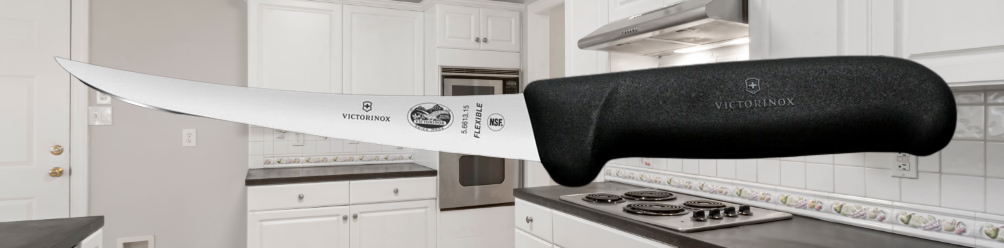
Victorinox is a useful brand for understanding the distinction because it produces both boning and filleting knives.
Victorinox currently describes filleting blades as flexible and designed to negotiate fish bones cleanly.
Its boning knives are available with different degrees of flexibility, while its fillet knives emphasize the longer, flexible profile needed to follow fish bones.
Victorinox Boning Knife — Pros
✔ Lightweight
✔ Excellent maneuverability
✔ Flexible options available
✔ Good grip options
✔ Suitable for meat and some fish work
Cons
✘ Utilitarian styling on professional models
✘ A flexible version won’t provide the stiffness some game processors prefer
Best For
🏆 The home cook who wants one versatile boning knife.
🥈 Dexter-Russell — Excellent for Fish and Butchery
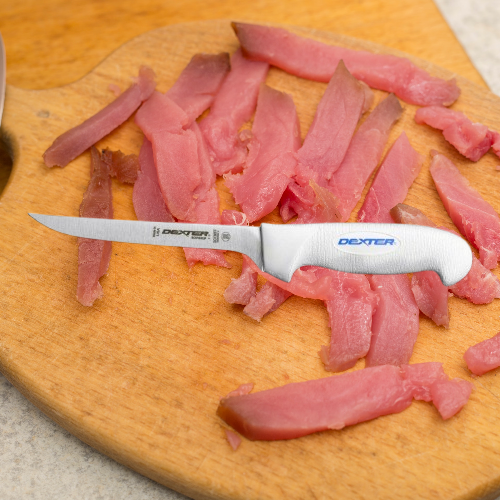
Dexter-Russell SOFGRIP or Sani-Safe fillet knife.
Dexter-Russell has a long association with professional food preparation and offers numerous specialized butchering and fish-processing knives.
A typical Dexter fillet knife demonstrates exactly what we’re talking about: a relatively long, narrow blade combined with enough flexibility to work closely around a fish’s skeleton.
Dexter-Russell Fillet Knife — Pros
✔ Long, narrow blade
✔ Flexible designs available
✔ Excellent for fish processing
✔ Professional-style handles available
✔ Strong choice for frequent seafood preparation
Cons
✘ Professional styling isn’t particularly luxurious
✘ Flexible fillet models aren’t intended for heavy bone work
Best For
🏆 Anglers and cooks who frequently prepare whole fish.
Visit Dexter-Russell Official Website
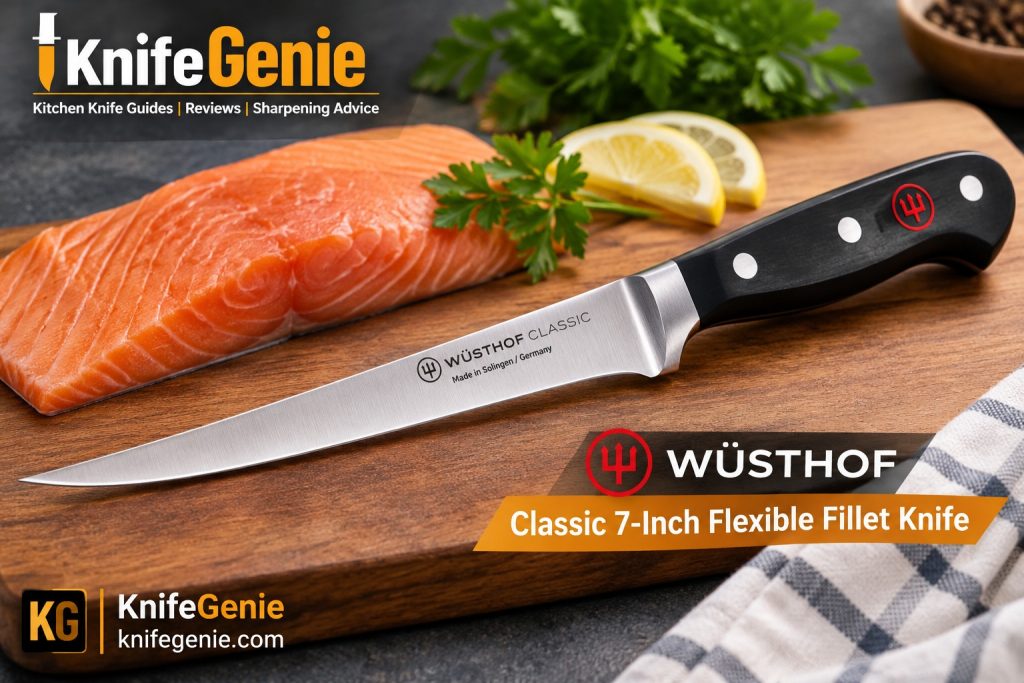
🥉 Wüsthof — Premium Option
Visit Wüsthof Official Website
Wüsthof provides one of the clearest manufacturer explanations of the difference between these knives.
Its boning knives use a narrow, pointed blade designed to maneuver around bones.
Its fillet knives take that concept further with a thinner, more flexible blade designed for precise filleting and skin removal.
For example, Wüsthof’s current Classic Ikon 7-inch Fillet Knife uses a flexible, forged blade intended for fine filleting and separating fish from skin.
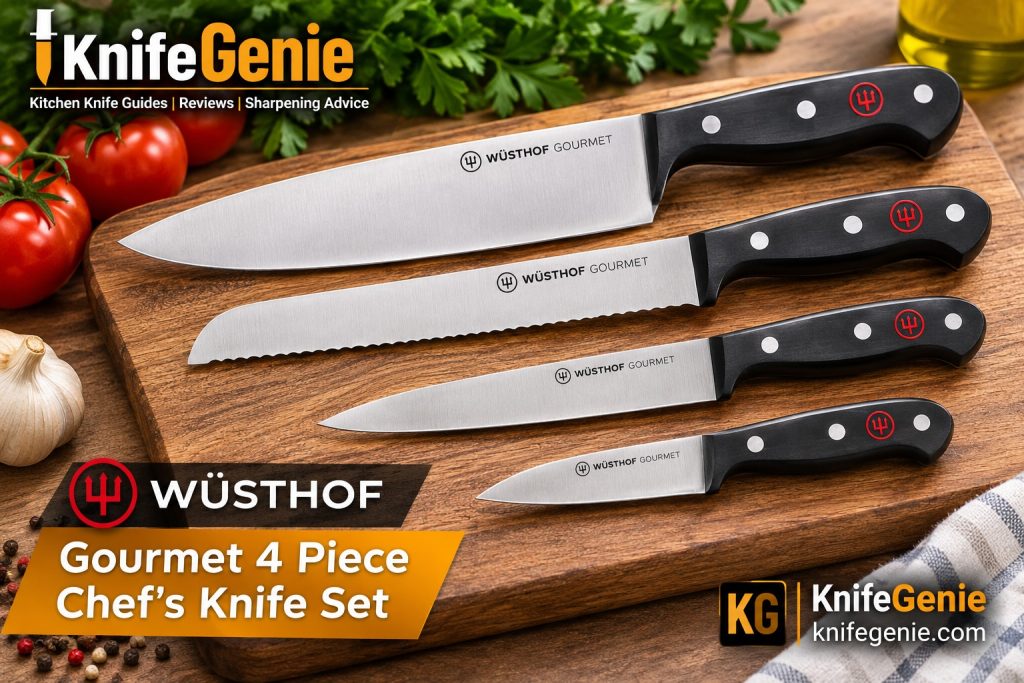
Wüsthof Gourmet 4-Piece Chef’s Knife Set
Wüsthof Fillet Knife — Pros
✔ Premium forged construction available
✔ Excellent flexibility
✔ Precise blade
✔ Comfortable premium handles
✔ Excellent fit and finish
Cons
✘ Considerably more expensive than many commercial-style knives
✘ Premium construction may be unnecessary for occasional fish preparation
Best For
🏆 The home cook who wants a premium fillet knife and doesn’t mind paying more for it.
⚔️ Boning Knife vs Fillet Knife
Which Knife Should You Buy?
Choosing between a boning knife and a fillet knife comes down to the foods you prepare most often.
You don’t necessarily need both. Start with the knife that suits your everyday cooking.
| Your Main Kitchen Task | Recommended Knife |
|---|---|
| Deboning chicken or turkey | 5–6-inch boning knife |
| Trimming beef, pork or lamb | Stiff or semi-flexible boning knife |
| Processing venison or game | Stiff boning knife |
| Filleting whole fish | Flexible fillet knife |
| Removing fish skin | Flexible fillet knife |
| Preparing meat and occasional fish | 6-inch semi-flexible boning knife |
| Regularly preparing both meat and fish | Consider owning both |
What Blade Length Should You Choose?
For most home cooks, a 5- to 6-inch boning knife provides an excellent balance of control and maneuverability.
Fillet knife length depends more on the size of the fish. A shorter blade can be easier to control when working with smaller fish, while a longer blade allows smoother slicing strokes on larger fish.
Remember that blade flexibility matters just as much as length. A stiff boning knife is useful for heavier meat preparation, while a flexible fillet knife is better suited to following fish bones.
KnifeGenie’s Recommendation
Best all-around choice: A 6-inch semi-flexible boning knife for home cooks who primarily prepare meat but occasionally work with fish.
Best for seafood: A dedicated flexible fillet knife for anyone who regularly cleans, skins or fillets whole fish.
Best for frequent meat and fish preparation: Own both knives, since each performs its specialized tasks more efficiently.
For help selecting a boning knife, read our Best Boning Knife for Home Butchers guide.
Let’s make this really easy.
“I mostly prepare chicken.”
👉 Buy a boning knife.
“I buy large cuts of beef and trim them myself.”
👉 Boning knife.
“I process deer and other game.”
👉 Stiff or semi-stiff boning knife.
“I catch and clean my own fish.”
👉 Fillet knife.
“I buy whole fish regularly.”
👉 Fillet knife.
“I cook meat and fish equally.”
👉 Ideally, buy both.
“I only want ONE.”
👉 Buy a flexible or semi-flexible 6-inch boning knife.
For most home kitchens, that’s the more versatile choice.
🏆 KnifeGenie Head-to-Head Verdict
| Category | Winner |
|---|---|
| Chicken | 🥩 Boning Knife |
| Beef | 🥩 Boning Knife |
| Pork | 🥩 Boning Knife |
| Lamb | 🥩 Boning Knife |
| Wild game | 🥩 Boning Knife |
| Trimming fat | 🥩 Boning Knife |
| Removing silverskin | 🥩 Boning Knife |
| Whole fish | 🐟 Fillet Knife |
| Skinning fish | 🐟 Fillet Knife |
| Following fish bones | 🐟 Fillet Knife |
| Long delicate cuts | 🐟 Fillet Knife |
| Overall versatility | 🏆 Boning Knife |
📏 What Blade Length Should You Choose?
Boning Knife
For most home cooks:
5–6 inches is an excellent starting point.
It provides enough blade to work efficiently while remaining highly maneuverable around joints and bones.
Fillet Knife
Fish size matters more.
Victorinox currently offers filleting knives in different sizes and recommends matching blade length to the fish being prepared.
As a general buying principle:
Smaller fish → shorter fillet knife
Larger fish → longer fillet knife
A longer blade makes it easier to make clean, sweeping cuts through larger fish.
🧠 KnifeGenie Pro Tips
A few simple habits can help you get better results from either knife while protecting the blade and working safely.
🐟 Use the right flexibility: Choose a stiffer blade for heavier meat trimming and a flexible blade for delicate fish filleting.
🔪 Keep your knife sharp: A sharp edge requires less pressure and gives you better control. Learn more in our How to Sharpen a Boning Knife guide.
🪵 Use a stable cutting board: Place a damp towel or nonslip mat underneath to prevent movement.
🦴 Let the blade do the work: Make smooth, controlled cuts rather than forcing the knife through bones or joints.
🧼 Clean and dry immediately: Wash carefully after preparing raw meat or fish, then dry thoroughly before storing.
🎯 Match the knife to what you actually cook. Don’t buy a specialized fillet knife because it looks impressive if you prepare a whole fish twice a year.
✋ Don’t assume more flexibility is always better. Flexibility is useful for fish and delicate work; stiffness gives you control during heavier butchery.
KnifeGenie Tip: Whether you’re deboning chicken or filleting fish, good technique and a sharp blade matter more than owning an expensive knife.
❓ Frequently Asked Questions
Is a boning knife the same as a fillet knife?
No. Boning knives are designed primarily for meat preparation; fillet knives specialize in fish.
Which is more flexible: a boning knife or a fillet knife?
Usually a fillet knife, although flexible boning knives are also available.
Can I fillet fish with a boning knife?
Yes. A flexible boning knife works for occasional filleting, especially with smaller fish.
Can I debone chicken with a fillet knife?
Yes, for delicate work, but a boning knife generally offers better control around joints.
Which knife is better for removing fish skin?
A flexible fillet knife is generally better for removing fish skin with controlled slicing strokes.
Which knife is better for deer?
A stiff or semi-stiff boning knife is generally the better choice.
Which knife is better for trimming brisket?
A boning knife is excellent for detailed trimming, particularly when removing hard fat or working around awkward areas.
For larger sweeping trimming jobs, some cooks and pitmasters also prefer longer breaking or slicing-style knives.
Do I need both knives?
Not necessarily. One may be enough for occasional use, but both are useful if you regularly prepare meat and whole fish.
What is the best all-purpose choice?
For most home cooks choosing between these two, a 6-inch semi-flexible boning knife is a versatile starting point.
🏆 6-Inch Semi-Flexible Boning Knife
It’s compact enough for poultry, strong enough for general meat trimming and flexible enough for some delicate work.
Serious anglers should still choose a dedicated fillet knife.
🥩 Want Help Choosing a Boning Knife?
If you’ve decided the boning knife is right for you, don’t stop here.
Our current guide compares different options for poultry, beef, game, and general home butchery:
👉 Read: Best Boning Knife for Home Butchers
Or explore more knife guides at:
🏁 Final Cut: Boning Knife or Fillet Knife?
Here’s the easiest way to make your decision.
If your food has legs, start with a boning knife.
If it has fins, reach for the fillet knife.
That’s obviously a simplification—but it’s a surprisingly useful rule.
The boning knife wins for overall versatility. Its shorter, controllable blade makes it ideal for chicken, beef, pork, lamb, game, trimming fat and removing silverskin.
The fillet knife wins for fish. Its longer, thinner and more flexible blade follows bones beautifully and makes skinning much easier.
When comparing a boning knife vs fillet knife, neither knife is universally better. The right choice depends on whether you primarily prepare meat or fish.
🏆 KnifeGenie Verdict
Best for most home cooks: 6-inch semi-flexible boning knife
Best for anglers and seafood lovers: 7- to 9-inch flexible fillet knife
Best setup for people who butcher meat and clean fish regularly: Own both.
They’re similar knives.
But once you use each one for the job it was designed to do, the difference becomes obvious.
Sharp knives. Smart choices.
— KnifeGenie